The following is a timeline of the history of the city of Vilnius, Lithuania.
Prior to 17th century
- 1323
- Gediminas relocates Lithuanian capital to Vilnius from Trakai.
- Castle on Gediminas Hill expanded.
- 1330 – Coat of arms of Vilnius granted.
- 1345 – Pyatnitzkaya Church built.
- 1348 – Cathedral of the Theotokos built.
- 1387
- Magdeburg rights granted.
- St. Nicholas Church built.
- 1397 – Cathedral School active (approximate date).
- 1409 – Gediminas' Tower built.
- 1413 – City becomes capital of the newly formed Vilnius Voivodeship by the Union of Horodło.
- 1426 – Church of St. John built.
- 1469 – Church of Saints Bernard and Francis founded.
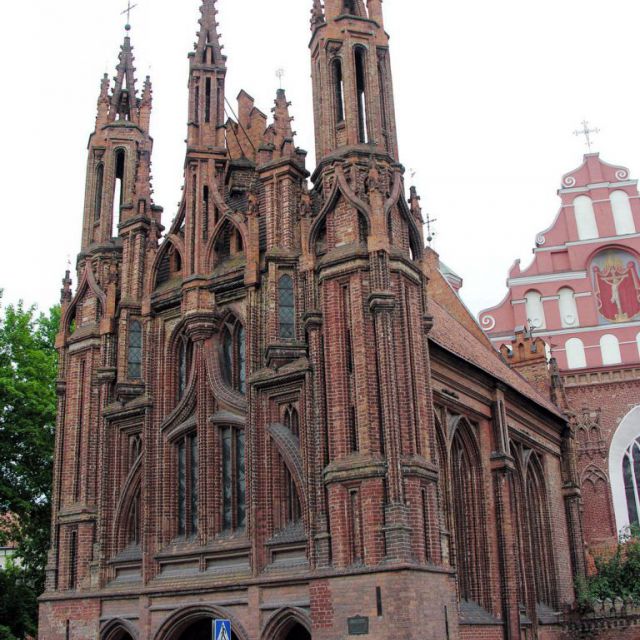
- 1500 – St. Anne's Church consecrated.
- 1501 – First mentions of Armenians in the city.
- 1522
- City walls and Gate of Dawn built.
- Francysk Skaryna sets up printing press.
- 1555 – Lutheran Church built on Nyemetzkaya Street.
- 1557 – Vilnius Cathedral rebuilt.
- 1560 – St. Paraskeva Church rebuilt.
- 1570 – Jesuit library established.
- 1572 – Synagogue built.
- 1579 – Alma Academia et Universitas Vilnensis Societatis Iesu founded.
- 1588 – Plague.
- 1597 – Monastery of the Holy Ghost founded.
17th-18th centuries
- 1610 – Fire.
- 1626 – Church of St. Theresa founded.
- 1630 – All Saints Church built.
- 1633 – Great Synagogue built.
- 1644 – Biblioteca Sapehana willed to Vilnia University.
- 1653 – Radziwill Palace built.
- 1655 – July: Battle of Vilnius; Russians in power.
- 1656 – Town becomes part of Russia.
- 1658 – Battle of Werki.
- 1697 – Sapieha Palace built.
- 1701 – St. Peter and St. Paul's Church built.
- 1702 – Swedes in power.
- 1710 – Plague.
- 1739 – Green Bridge constructed.
- 1749 – Divine Mercy Sanctuary built.
- 1778 – Lithuanian 5th Infantry Regiment relocated from Pińsk to Wilno.
- 1779 – 5th Infantry Regiment relocated from Wilno to Mścibów.
- 1781 – University Botanical Garden established.
- 1783 – 5th Infantry Regiment relocated from Mścibów back to Wilno.
- 1787 – Lithuanian 4th Infantry Regiment stationed in Wilno.
- 1788 – Russians in power.
- 1790
- 4th Infantry Regiment relocated from Wilno to Borysów.
- Lithuanian 3rd Infantry Regiment relocated from Kowno to Wilno.
- 1791
- Lithuanian 3rd Infantry Regiment relocated from Wilno back to Kowno.
- Lithuanian 7th Infantry Regiment stationed in Wilno.
- 1794 – Vilnius Uprising.
- 1795
- Town becomes part of Russia, and capital of Vilna Governorate.
- St. Paraskeva Church rebuilt.
- 1799
- Town Hall rebuilt.
- Romm publishing house relocates to Vilnius.
19th century
- 1801
- Rasos Cemetery consecrated.
- Royal Palace demolished.
- 1809 – Antakalnis Cemetery established.
- 1810 – Bernardine Cemetery established.
- 1812
- Napoleon uses the city as a military base.
- Vilnian National Guard formed.
- 5 July: 3rd Light Cavalry Regiment of the Polish Guards founded in Wilno.
- 22 September: Polish 21st Mounted Rifles Regiment founded in Wilno.
- 1823 – Population: 20,900.
- 1825 – Tuskulenai Manor built.
- 1828 – Jewish cemetery established in Uzupis (approximate date).
- 1831 – Uprising.
- 1832 – University closed.
- 1834 – Presidential Palace renovated.
- 1836 – St. George Avenue laid out.
- 1845 – Theatre opens.
- 1852 – Central Archive of Early Register Books established.
- 1855 – Museum of Antiquities established.
- 1856 – Public library established.
- 1861 – Demonstration against Russian Empire.
- 1863 – Uprising against Russian Empire.
- 1866 – St. Nicholas Orthodox Church reconsecrated.
- 1867 – Pretchistenski Cathedral rebuilt.
- 1881 – Population: 89,560.
- 1883 – Population: 93,760.
- 1897 – Jewish Labor Bund founded in Vilnius.
- 1898 – St. Alexander Nevsky Church and District Court built.
- 1900 – Population: 162,633.
20th century
- 1901 – Kaziukas Fair relocates to Place Lukiskim.
- 1903 – Power Plant, Choral Synagogue and Our Lady of the Sign Church built.
- 1904 – Lukiškės Prison built.
- 1905 – December: Great Seimas of Vilnius held.
- 1906
- Society of Friends of Science organized.
- Vileišis Palace built.
- 1907 – Lithuanian Art Society founded.
- 1911 – St. Casimir Church, Naujoji Vilnia built.
- 1913
- Orthodox Church of St. Michael and St. Constantine built.
- Population: 204,290.
- 1915
- 19 September: Germans in power.
- City becomes capital of Lithuania District.
- 1916 – Vilna Troupe active.
- 1918
- 16 February: Lithuania declares independence from German Empire.
- Museum of History and Ethnography established.
- 1919
- April: Vilna offensive by Polish army.
- Central Library of Lithuania organized.
- Jabłkowski Brothers department store opens.
- 1920 – October: Żeligowski's Mutiny.
- 1925
- Darius Stadium opens.
- Elektrit Radiotechnical Society, Roman Catholic Metropolitan Archdiocese of Vilnius, and Yiddish Scientific Institute established.
- 6 May: School massacre.
- 1926 – City becomes capital of Wilno Voivodeship.
- 1928 – Northern Trade Fair begins.
- 1931 – Population: 195,000.
- 1933
- City Museum established.
- Śmigły Wilno soccer team formed.
- 1939
- 18–19 September: Battle of Wilno (1939) between the Poles and the invading Soviets at the start of World War II.
- Soviets in power.
- 28 October: Lithuanians in power.
- Vilnius Pedagogical Institute established.
- 1940
- City becomes capital of Lithuanian Soviet Socialist Republic.
- Vilnius State Theatre established.
- 1941
- June: Germans in power.
- July: Ponary massacre begins.
- 5 July: Dulag transit camp for prisoners of war deployed in the city.
- August: Dulag transit camp for prisoners of war relocated to Lida.
- August: Subcamp of the Stalag 336 POW camp established by the Germans.
- 9 September: Subcamp of Stalag 336 converted into the Stalag 344 POW camp.
- December: Wehrmacht military prison established.
- 1942 – Fareynikte Partizaner Organizatsye formed in Vilna Jewish Ghetto.
- 1943 – HKP 562 forced labor camp set up by Germans.
- 1944
- Wehrmacht military prison relocated to Tarnów.
- 6–15 July: Operation Ostra Brama; Soviets in power.
- Airport begins operating.
- 1945 – Music School founded.
- 1946 – Russian Drama Theatre re-established.
- 1950 – Žalgiris Stadium opens.
- 1951 – Vilnius Heat Plant commissioned.
- 1955 – Šeškinė village becomes part of the city.
- 1956
- Trolleybuses begin operating.
- Vilnius Gediminas Technical University established.
- 1963
- National Library of Lithuania relocates to Vilnius.
- Polish Theater founded.
- 1964 – Statyba basketball team formed.
- 1965
- Žirmūnai Bridge constructed.
- Vingis Park renovated.
- Population: 293,000.
- 1967 – Technika (publisher) established.
- 1968 – Ratilio ensemble formed.
- 1971 – Palace of Concerts and Sports opens.
- 1972 – Valakampiai Bridge constructed.
- 1974
- Lithuanian National Opera and Ballet Theatre built.
- Evangelical Cemetery demolished.
- 1979 – Population: 503,000.
- 1980 – Seimas Palace and Vilnius TV Tower built.
- 1983 – Vilnius Combined Heat and Power Plant commissioned.
- 1985 – Population: 544,000.
- 1987 – Vilnius Jazz Festival begins.
- 1989 – Jewish State Museum established.
- 1990
- 11 March: Lithuania declares independence from USSR.
- Vilnius Lyceum and Vilniaus lietuvių namai (school) established.
- 1991 – January: City besieged by Soviet forces.
- 1992
- Genocide and Resistance Research Centre of Lithuania and Verkiai Regional Park established.
- Museum of Genocide Victims opens.
- 1994 – Military Academy of Lithuania established.
- 1995 – Alis Vidūnas becomes mayor.
- 1997
- 1 April: Užupis neighborhood declares itself an independent republic.
- Rolandas Paksas becomes mayor.
- Kalnai Park established.
- 1999
- Vilnius Book Fair begins.
- Juozas Imbrasas becomes mayor.
- 2000
- House of the Signatories museum opens.
- Artūras Zuokas becomes mayor.
21st century
- 2001 – Sportima Arena opens.
- 2002
- Vilnius Ice Palace opens.
- Energy and Technology Museum established.
- 2003
- Mindaugas Bridge opens.
- 750th anniversary of the coronation of Mindaugas.
- FK Vetra relocates to Vilnius.
- 2004
- Siemens Arena and Vetra Stadium open.
- European Humanities University relocates to Vilnius.
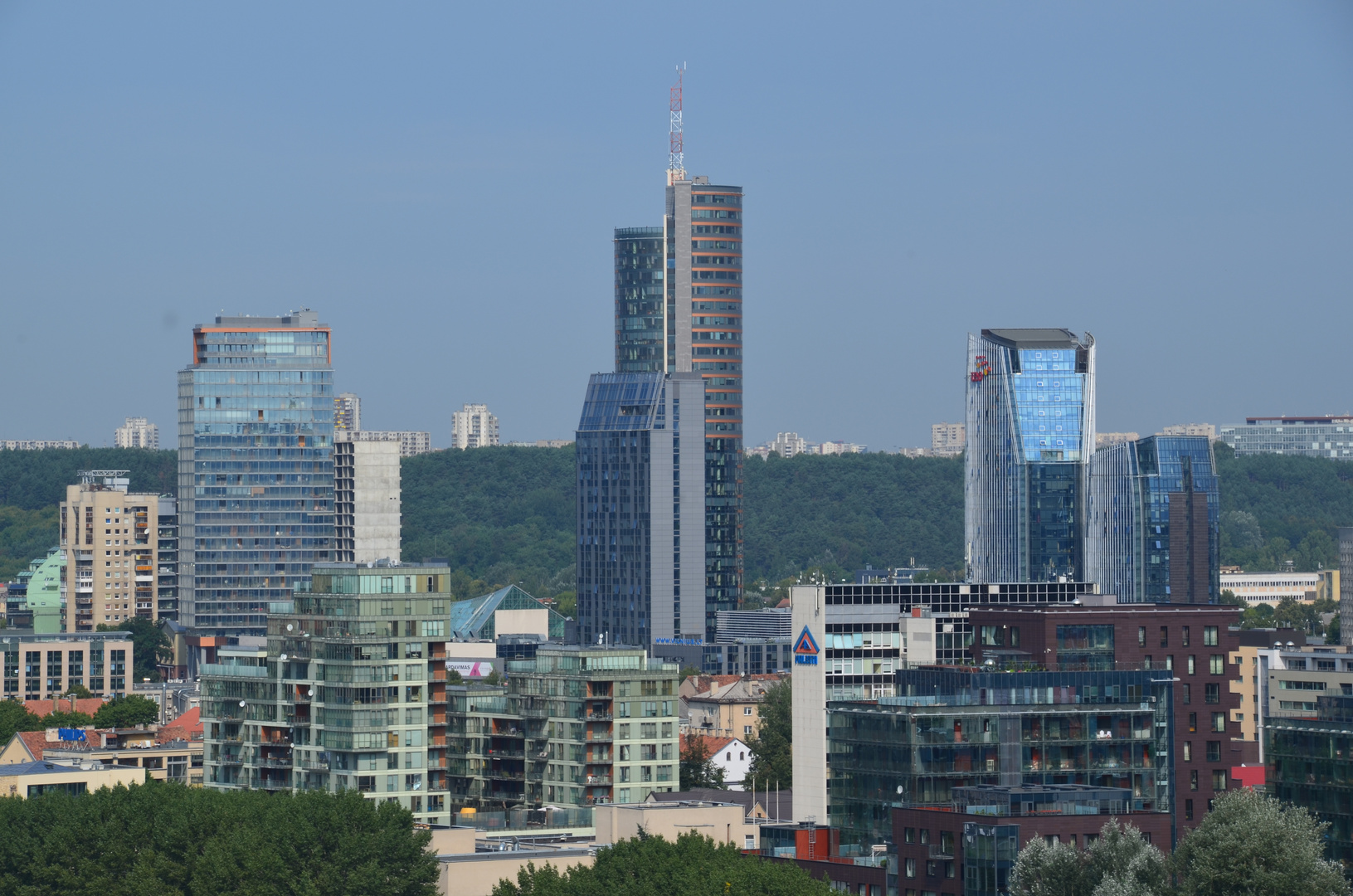
- Europa Tower built.
- Mykolas Romeris University and Vilnius Academy of Business Law established.
- Vilnius Marathon begins.
- 2005 – Lietuvos rytas Arena opens.
- 2006 – May: City hosts regional democracy conference.
- 2007
- Juozas Imbrasas becomes mayor again.
- Jonas Mekas Visual Arts Center opens.
- 2008
- February: City hosts NATO meeting.
- Vilnius Airport railway station opens.
- Gariunai Market pavilion built.
- 2009
- Palace of the Grand Dukes of Lithuania rebuilt.
- City designated a European Capital of Culture.
- 2011
- Vilniaus viesasis transportas (bus company) established.
- Population: 554,060.
- Artūras Zuokas becomes mayor again.
- 2015 – Remigijus Šimašius becomes mayor.
- 2023
- July: City hosts NATO meeting.
See also
- History of Vilnius
- List of mayors of Vilnius
- Neighborhoods of Vilnius
References
This article incorporates information from the Lithuanian Wikipedia, Polish Wikipedia, and Russian Wikipedia.
Bibliography
External links
.jpg)